The Ideal Travel Companion
The Ideal Travel Companion

Fall 2025 | Prof. Paolo Grazioli
Fall 2025 | Prof. Paolo Grazioli
Fall 2025 | Prof. Paolo Grazioli
Service Designer, Researcher, Strategist
Service Designer, Researcher, Strategist
Service Designer, Researcher, Strategist
Service Designer, Researcher, Strategist
Service Designer, Researcher, Strategist
Team : Maitreyi Badami, Pallavi Borkar, Ashley Huff
Team : Maitreyi Badami, Pallavi Borkar, Ashley Huff
Team : Maitreyi Badami, Pallavi Borkar, Ashley Huff
Team : Maitreyi Badami, Pallavi Borkar, Ashley Huff
Team : Maitreyi Badami, Pallavi Borkar, Ashley Huff
Skills
Skills
Skills
Research
Research
Research
Critical Thinking
Critical Thinking
Critical Thinking
User Interviews
User Interviews
User Interviews
Surveys
Surveys
Surveys
Visual Design
Visual Design
Visual Design
Methods
Methods
Methods
Primary Interview
Primary Interview
Primary Interview
Lextant framework
Lextant framework
Lextant framework
Overview
Overview
Overview
Overview
This foundational research project explored the deep emotional and practical needs of travelers to define what makes a digital app an ideal companion. Through a structured process of qualitative interviews and synthesis, we transformed user feelings about safety, confidence, and connection into a clear design strategy.
This foundational research project explored the deep emotional and practical needs of travelers to define what makes a digital app an ideal companion. Through a structured process of qualitative interviews and synthesis, we transformed user feelings about safety, confidence, and connection into a clear design strategy.
This foundational research project explored the deep emotional and practical needs of travelers to define what makes a digital app an ideal companion. Through a structured process of qualitative interviews and synthesis, we transformed user feelings about safety, confidence, and connection into a clear design strategy.
Challenge
Challenge
Challenge
Challenge
We wanted to understand what travelers value beyond basic functions, focusing on core emotions and needs that create feelings of safety, confidence, and connection.
We wanted to understand what travelers value beyond basic functions, focusing on core emotions and needs that create feelings of safety, confidence, and connection.
Approach
Approach
Approach
Approach
We conducted in-depth interviews with diverse travelers, guiding our conversations with the Lextant framework. We then used affinity mapping to systematically analyze the data and uncover meaningful patterns.
We conducted in-depth interviews with diverse travelers, guiding our conversations with the Lextant framework. We then used affinity mapping to systematically analyze the data and uncover meaningful patterns.
Result
Result
Result
Result
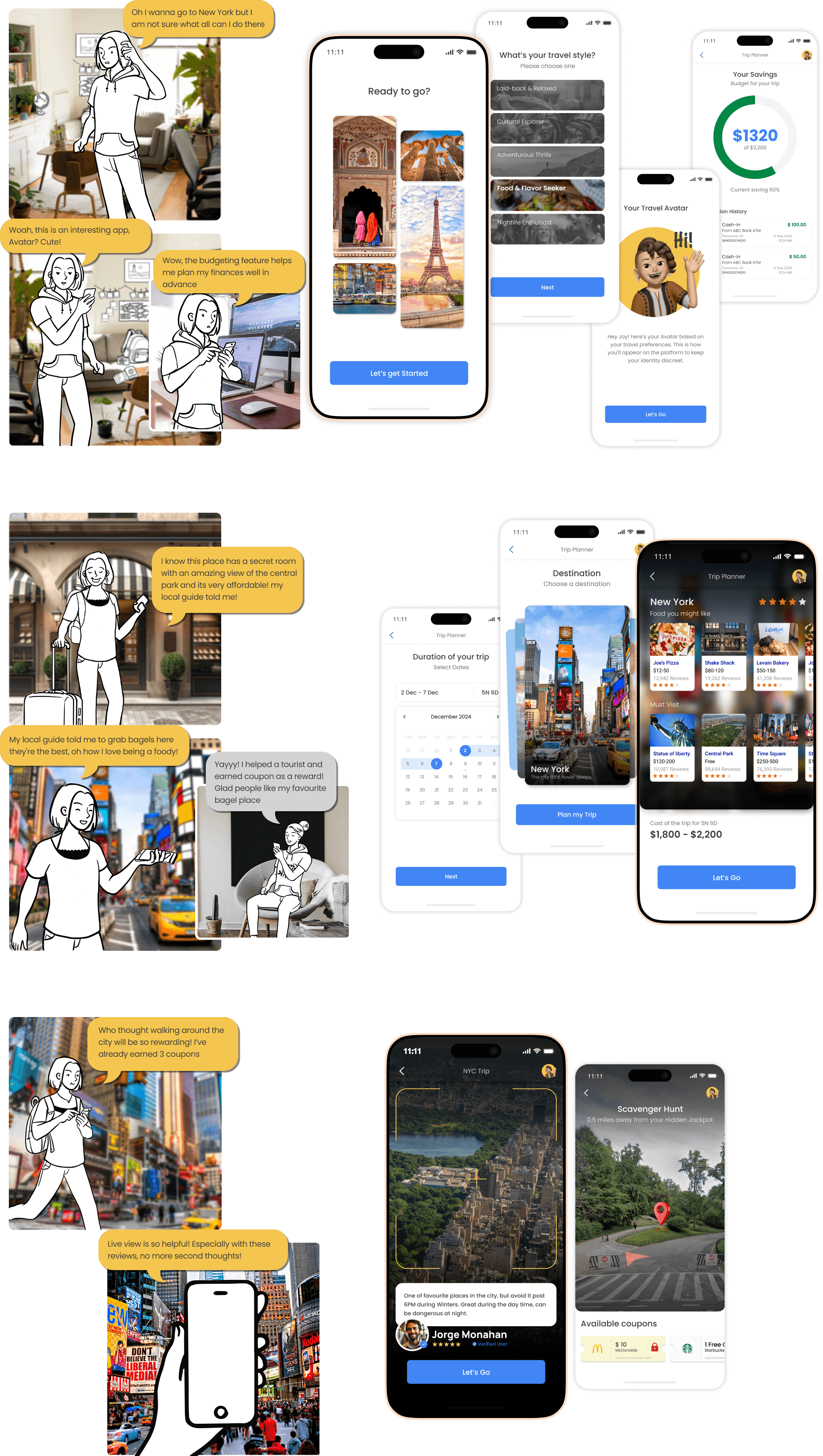
Our research produced a set of actionable insights and defined four key design pillars: Safety, Connection, Confidence, and Exploration. This created a strategic blueprint for developing features like real-time safety info, personalized local experiences, and reliable offline planning tools.
Our research produced a set of actionable insights and defined four key design pillars: Safety, Connection, Confidence, and Exploration. This created a strategic blueprint for developing features like real-time safety info, personalized local experiences, and reliable offline planning tools.
Our Guiding Methodology: The Lextant Framework
Our Guiding Methodology: The Lextant Framework
Our Guiding Methodology: The Lextant Framework
To ensure we captured the complete travel experience, we used the Lextant framework as our guide. It's a user research tool designed to go beyond surface-level features and uncover the deep emotional drivers behind user behavior.
Its key benefit is its ability to map the full user journey, directly connecting a desired emotional outcome (like “I feel confident”) to the tangible product feature (like “offline maps”) required to deliver that feeling.
To ensure we captured the complete travel experience, we used the Lextant framework as our guide. It's a user research tool designed to go beyond surface-level features and uncover the deep emotional drivers behind user behavior.
Its key benefit is its ability to map the full user journey, directly connecting a desired emotional outcome (like “I feel confident”) to the tangible product feature (like “offline maps”) required to deliver that feeling.
The Ideal Experience
MARTY GAGE AND SPENCER MURRELL
Our Guiding Methodology: The Lextant Framework
To ensure we captured the complete travel experience, we used the Lextant framework as our guide. It's a user research tool designed to go beyond surface-level features and uncover the deep emotional drivers behind user behavior.
Its key benefit is its ability to map the full user journey, directly connecting a desired emotional outcome (like “I feel confident”) to the tangible product feature (like “offline maps”) required to deliver that feeling.
The Ideal Experience
MARTY GAGE AND SPENCER MURRELL
Our Guiding Methodology: The Lextant Framework
To ensure we captured the complete travel experience, we used the Lextant framework as our guide. It's a user research tool designed to go beyond surface-level features and uncover the deep emotional drivers behind user behavior.
Its key benefit is its ability to map the full user journey, directly connecting a desired emotional outcome (like “I feel confident”) to the tangible product feature (like “offline maps”) required to deliver that feeling.
The Ideal Experience
MARTY GAGE AND SPENCER MURRELL
Defining the "Ideal" Experience
Defining the "Ideal" Experience
Defining the "Ideal" Experience
The market is full of travel apps, but many focus only on transactional functions like booking flights. Our mission was to uncover what travelers value most on a deeper, more emotional level. We wanted to move beyond features to understand the core behaviors and feelings that shape a travel experience.
Our guiding question was:
The market is full of travel apps, but many focus only on transactional functions like booking flights. Our mission was to uncover what travelers value most on a deeper, more emotional level. We wanted to move beyond features to understand the core behaviors and feelings that shape a travel experience.
Our guiding question was:
How might we create a digital travel companion that helps users feel prepared, confident, and connected in any environment?
How might we create a digital travel companion that helps users feel prepared, confident, and connected in any environment?
How might we create a digital travel companion that helps users feel prepared, confident, and connected in any environment?
Defining the "Ideal" Experience
The market is full of travel apps, but many focus only on transactional functions like booking flights. Our mission was to uncover what travelers value most on a deeper, more emotional level. We wanted to move beyond features to understand the core behaviors and feelings that shape a travel experience.
Our guiding question was:
How might we create a digital travel companion that helps users feel prepared, confident, and connected in any environment?
Defining the "Ideal" Experience
The market is full of travel apps, but many focus only on transactional functions like booking flights. Our mission was to uncover what travelers value most on a deeper, more emotional level. We wanted to move beyond features to understand the core behaviors and feelings that shape a travel experience.
Our guiding question was:
How might we create a digital travel companion that helps users feel prepared, confident, and connected in any environment?
Our Approach: Understanding the Traveler's Mind
Our Approach: Understanding the Traveler's Mind
Our Approach: Understanding the Traveler's Mind
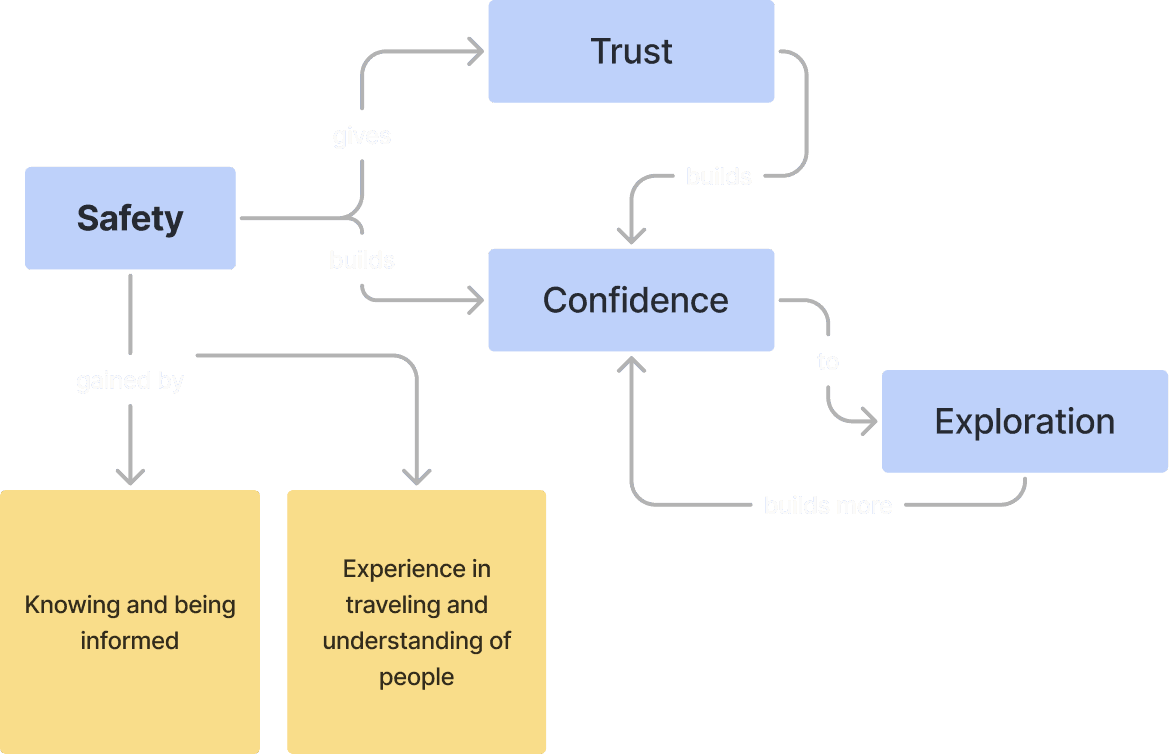
Step 1: Creating the Lextant Framework & Identifying Insights:
Step 1: Creating the Lextant Framework & Identifying Insights:
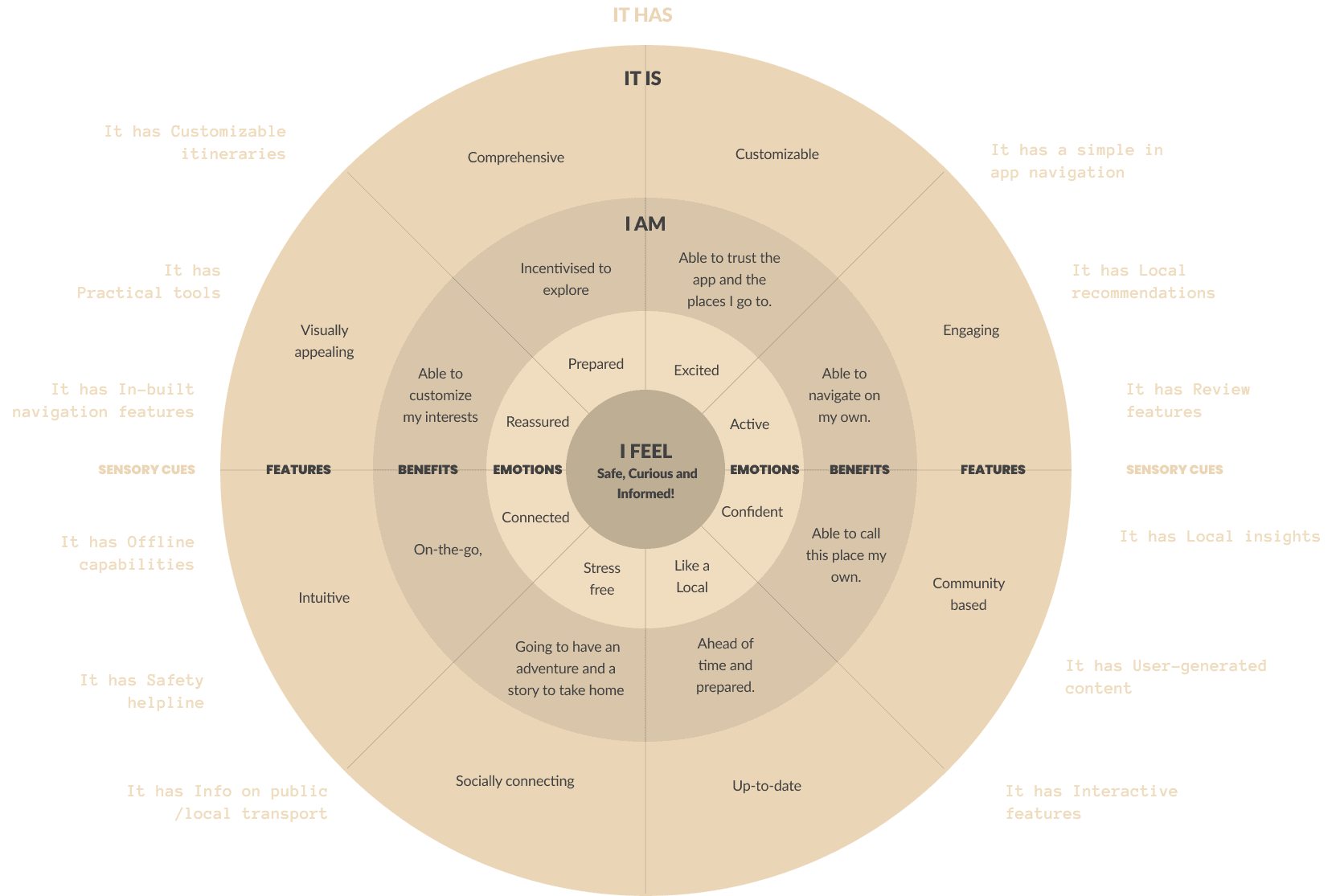
We began by building the Lextant framework tailored to the travel domain, identifying key insights and keywords we wanted to explore. This became our map for the research process.
We began by building the Lextant framework tailored to the travel domain, identifying key insights and keywords we wanted to explore. This became our map for the research process.
Step 2: Conducting Interviews Through the Lextant Lens:
Step 2: Conducting Interviews Through the Lextant Lens:
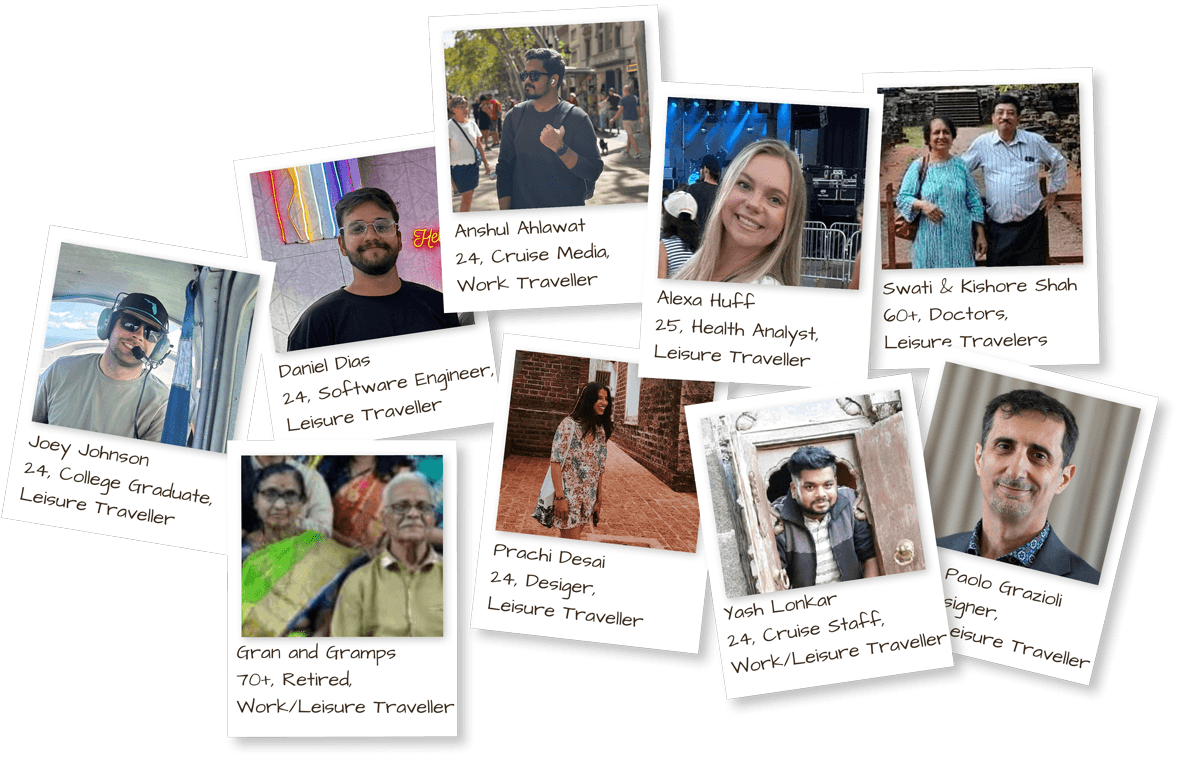
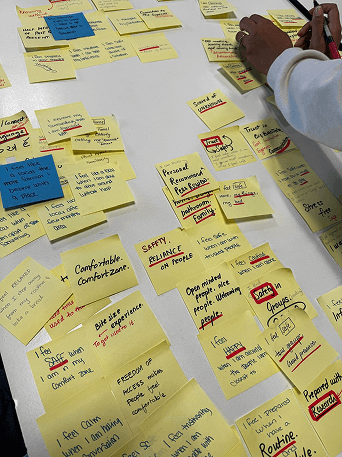
We conducted in-depth interviews with a diverse group of travelers. Instead of asking generic questions, we used the keywords from our framework as prompts, asking participants to share personal stories about their experiences with travel. This allowed us to gather rich, context-driven narratives.
We conducted in-depth interviews with a diverse group of travelers. Instead of asking generic questions, we used the keywords from our framework as prompts, asking participants to share personal stories about their experiences with travel. This allowed us to gather rich, context-driven narratives.
Step 3: Affinitizing Insights to Find Themes:
Step 3: Affinitizing Insights to Find Themes:
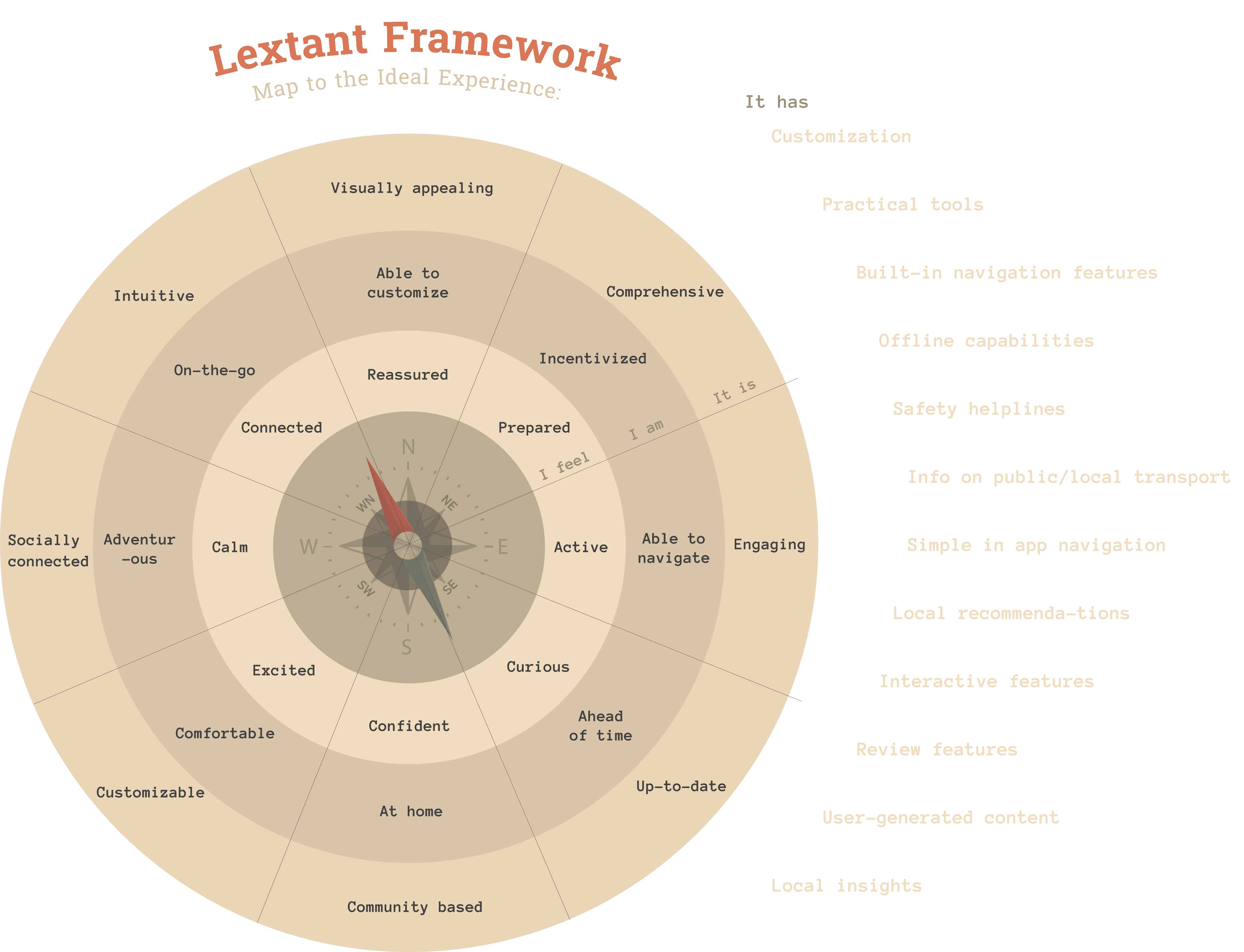
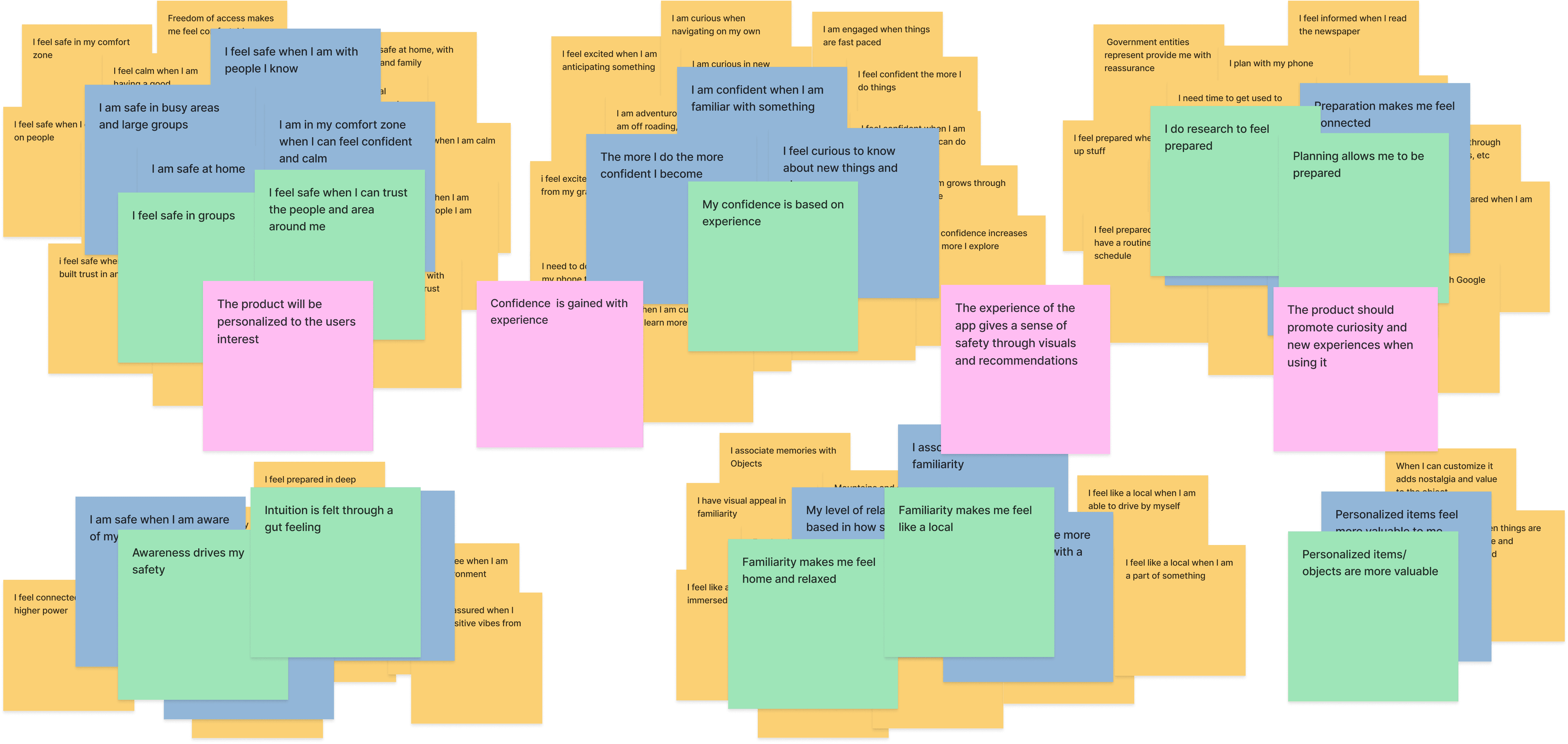
We synthesized our findings by mapping the user stories and quotes back onto the four quadrants of the Lextant framework. Through this affinity mapping process, we clustered hundreds of data points to find common themes and patterns. This step allowed us to clearly see which emotions and needs were most important to travelers, bridging the gap between their feelings and the features they require.
We synthesized our findings by mapping the user stories and quotes back onto the four quadrants of the Lextant framework. Through this affinity mapping process, we clustered hundreds of data points to find common themes and patterns. This step allowed us to clearly see which emotions and needs were most important to travelers, bridging the gap between their feelings and the features they require.
Our Approach: Understanding the Traveler's Mind
Step 1: Creating the Lextant Framework & Identifying Insights:
We began by building the Lextant framework tailored to the travel domain, identifying key insights and keywords we wanted to explore. This became our map for the research process.
Step 2: Conducting Interviews Through the Lextant Lens:
We conducted in-depth interviews with a diverse group of travelers. Instead of asking generic questions, we used the keywords from our framework as prompts, asking participants to share personal stories about their experiences with travel. This allowed us to gather rich, context-driven narratives.
Step 3: Affinitizing Insights to Find Themes:
We synthesized our findings by mapping the user stories and quotes back onto the four quadrants of the Lextant framework. Through this affinity mapping process, we clustered hundreds of data points to find common themes and patterns. This step allowed us to clearly see which emotions and needs were most important to travelers, bridging the gap between their feelings and the features they require.
Our Approach: Understanding the Traveler's Mind
Step 1: Creating the Lextant Framework & Identifying Insights:
We began by building the Lextant framework tailored to the travel domain, identifying key insights and keywords we wanted to explore. This became our map for the research process.
Step 2: Conducting Interviews Through the Lextant Lens:
We conducted in-depth interviews with a diverse group of travelers. Instead of asking generic questions, we used the keywords from our framework as prompts, asking participants to share personal stories about their experiences with travel. This allowed us to gather rich, context-driven narratives.
Step 3: Affinitizing Insights to Find Themes:
We synthesized our findings by mapping the user stories and quotes back onto the four quadrants of the Lextant framework. Through this affinity mapping process, we clustered hundreds of data points to find common themes and patterns. This step allowed us to clearly see which emotions and needs were most important to travelers, bridging the gap between their feelings and the features they require.
The Result: Four Pillars for an Ideal Companion
The Result: Four Pillars for an Ideal Companion
The Result: Four Pillars for an Ideal Companion
The Result: Four Pillars for an Ideal Companion
Our synthesis revealed that an ideal travel companion must be built upon four foundational pillars. These pillars became our primary design directions:
Our synthesis revealed that an ideal travel companion must be built upon four foundational pillars. These pillars became our primary design directions:
Our synthesis revealed that an ideal travel companion must be built upon four foundational pillars. These pillars became our primary design directions:
Safety
Safety
Safety
Prioritize trustworthy information and real-time safety alerts.
Prioritize trustworthy information and real-time safety alerts.
Prioritize trustworthy information and real-time safety alerts.
Connection
Connection
Connection
Foster a sense of belonging through personalization and local experiences.
Foster a sense of belonging through personalization and local experiences.
Foster a sense of belonging through personalization and local experiences.
Confidence
Confidence
Confidence
Offer reliable tools that help users plan and navigate with ease.
Offer reliable tools that help users plan and navigate with ease.
Offer reliable tools that help users plan and navigate with ease.
Exploration
Exploration
Exploration
Encourage spontaneous discovery while keeping users informed and safe.
Encourage spontaneous discovery while keeping users informed and safe.
Encourage spontaneous discovery while keeping users informed and safe.
The Proposal
The Proposal
The Proposal
The Proposal
The Magazine
The Magazine
The Magazine
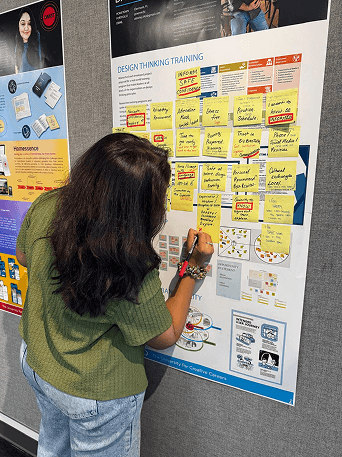
Work in Action
Work in Action
Work in Action

Back to top
Back to top
Back to top
Explore More Projects
Explore More Projects




Spoiler : I can make your team look good


Spoiler : I can make your team look good