PLVIxDesign

Back

Back

Back

Back

Back

Back

Self-Managed Chronic Care

Self-Managed Chronic Care

Fall 2025 | Prof. Silke Bochat

Fall 2025 | Prof. Silke Bochat

Fall 2025 | Prof. Silke Bochat

Service Designer, Researcher, Strategist

Service Designer, Researcher, Strategist

Service Designer, Researcher, Strategist

Service Designer, Researcher, Strategist

Service Designer, Researcher, Strategist

Service Designer, Researcher, Strategist

Skills

Skills

Skills

Stakeholder interviews

Stakeholder interviews

Stakeholder interviews

Desk research & literature scan

Desk research & literature scan

Desk research & literature scan

Case studies

Case studies

Case studies

Online ethnography

Online ethnography

Online ethnography

Thematic analysis

Thematic analysis

Thematic analysis

Research & Synthesis

Research & Synthesis

Research & Synthesis

Root Cause Analysis

Root Cause Analysis

Root Cause Analysis

Analytical Thinking

Analytical Thinking

Analytical Thinking

Stakeholder Networking

Stakeholder Networking

Stakeholder Networking

Storytelling

Storytelling

Storytelling

Teach-back comprehension checks

Teach-back comprehension checks

Teach-back comprehension checks

Methods

Methods

Methods

Primary Interview

Primary Interview

Primary Interview

Stakeholder Management

Stakeholder Management

Stakeholder Management

Stakeholder Mapping

Stakeholder Mapping

Stakeholder Mapping

Ecosystem Management

Ecosystem Management

Ecosystem Management

Service Blueprint

Service Blueprint

Service Blueprint

Impact Chain

Impact Chain

Impact Chain

Risk & fail-safe mapping

Risk & fail-safe mapping

Risk & fail-safe mapping

Blue Ocean Strategy

Blue Ocean Strategy

Blue Ocean Strategy

Partnership Strategy

Partnership Strategy

Partnership Strategy

Flourishing Business Model Canvas

Flourishing Business Model Canvas

Flourishing Business Model Canvas

Overview

Overview

Overview

Overview

For isolated older adults (65+), the first 30 days post-discharge are a dangerous "Home Gap" where confusion and anxiety trigger avoidable ER returns. I designed a hybrid ecosystem, Kiko (a companion robot), Medi-Mate (a non-clinical hotline), and a Volunteer Network to transform complex clinical instructions into daily reassurance and community-powered recovery.

For isolated older adults (65+), the first 30 days post-discharge are a dangerous "Home Gap" where confusion and anxiety trigger avoidable ER returns. I designed a hybrid ecosystem, Kiko (a companion robot), Medi-Mate (a non-clinical hotline), and a Volunteer Network to transform complex clinical instructions into daily reassurance and community-powered recovery.

For isolated older adults (65+), the first 30 days post-discharge are a dangerous "Home Gap" where confusion and anxiety trigger avoidable ER returns. I designed a hybrid ecosystem, Kiko (a companion robot), Medi-Mate (a non-clinical hotline), and a Volunteer Network to transform complex clinical instructions into daily reassurance and community-powered recovery.

Challenge

Challenge

Challenge

Challenge

Isolated seniors (65+) face a high-risk 30-day recovery gap where medical confusion and "Safety Anxiety" trigger preventable ER returns contributing to a $52B systemic crisis and mandatory penalties for 72% of U.S. hospitals.

Approach

Approach

Approach

Approach

I designed a hybrid care ecosystem connecting patients, clinical providers, and neighbors through a "Medi-Mate" hotline and actionable care plans, transforming medical complexity into proactive support and reassurance.

Result

Result

Result

Result

Achieved a 20% reduction in 30-day readmissions by identifying "red-flag" symptoms early and improving follow-up adherence lowering the total cost of care through increased patient confidence.

The Challenge

The Challenge

Identifying the Problem

Identifying the Problem

When older patients lack a support system at home, confusing discharge materials become a safety hazard. The inability to distinguish normal recovery symptoms from emergencies leads to missed doses and panic-driven ED visits. This failure in the continuity of care compromises patient quality of life and directly exposes health systems to HRRP readmission penalties.

When older patients lack a support system at home, confusing discharge materials become a safety hazard. The inability to distinguish normal recovery symptoms from emergencies leads to missed doses and panic-driven ED visits. This failure in the continuity of care compromises patient quality of life and directly exposes health systems to HRRP readmission penalties.

When older patients lack a support system at home, confusing discharge materials become a safety hazard. The inability to distinguish normal recovery symptoms from emergencies leads to missed doses and panic-driven ED visits. This failure in the continuity of care compromises patient quality of life and directly exposes health systems to HRRP readmission penalties.

Who & scope

Who & scope

Who & scope

Population

Adults 65+

Adults 65+

Living Alone

Living Alone

Recently discharged with HF or T2D

Recently discharged with HF or T2D

Time window

First 30 days post-discharge (highest risk period)

First 30 days post-discharge (highest risk period)

Setting

Home

Home

Community

Community

Primary Care

Primary Care

Pharmacy

Pharmacy

Data Flows via EHR

Data Flows via EHR

Research Approach

Research Approach

Methods

1:1 stakeholder interviews

Field Conversations

Policy/market Scan

Literature Review

Reddit ethnography (the GOLD mine)

Synthesis Tools

Service Blueprint

Ecosystem Map

Stakeholder map

Blue Ocean Strategy

ERRC

Flourishing Business Model Canvas

Journey & Emotional Arcs

2X2

Focus Cohort

Adults 65+

Recently Discharged

Heart Failure +/ Type 2 Diabetes

Living Alone

Research Synthesis

Research Synthesis

Research Outcome

Research Outcome

Patient's Pain Points

Patient's Pain Points

In the hospital, patients have a safety net. While discharge planning starts early, the actual education often happens right as they’re leaving when they’re too exhausted or anxious to retain it. Once home, that confidence evaporates. They turn to their discharge packet for help, but find a wall of tiny text and confusing layouts. They can’t easily separate 'what to do today' from 'what to do this week,' replacing a sense of security with confusion exactly when self-care matters most.

In the hospital, patients have a safety net. While discharge planning starts early, the actual education often happens right as they’re leaving when they’re too exhausted or anxious to retain it. Once home, that confidence evaporates. They turn to their discharge packet for help, but find a wall of tiny text and confusing layouts. They can’t easily separate 'what to do today' from 'what to do this week,' replacing a sense of security with confusion exactly when self-care matters most.

Document Clarity

Document Clarity

AVS and prescriptions are hard to read/act on (small font, jargon, long lists).

AVS and prescriptions are hard to read/act on (small font, jargon, long lists).

Lack of Reassurance

Lack of Reassurance

No trusted, non-911 helpline for small worries that feel big at 2am.

No trusted, non-911 helpline for small worries that feel big at 2am.

Medication Management

Medication Management

Changed regimens, “what if I miss a dose?”, duplicate drugs, refills not lined up.

Changed regimens, “what if I miss a dose?”, duplicate drugs, refills not lined up.

Logistics

Logistics

Rides to follow-ups, scale/BP/glucose supplies, weekend discharges with gaps.

Rides to follow-ups, scale/BP/glucose supplies, weekend discharges with gaps.

Safety Anxiety

Safety Anxiety

Fear of collapsing with no one to notice; no daily “I’m okay” check.

Fear of collapsing with no one to notice; no daily “I’m okay” check.

Social Isolation

Social Isolation

Alone without on-call reassurance, minor worries escalate into ED visits for safety and human contact.

Alone without on-call reassurance, minor worries escalate into ED visits for safety and human contact.

Document Clarity

AVS and prescriptions are hard to read/act on (small font, jargon, long lists).

Medication Management

Changed regimens, “what if I miss a dose?”, duplicate drugs, refills not lined up.

Safety Anxiety

Fear of collapsing with no one to notice; no daily “I’m okay” check.

Lack of Reassurance

No trusted, non-911 helpline for small worries that feel big at 2am.

Logistics

Rides to follow-ups, scale/BP/glucose supplies, weekend discharges with gaps.

Social Isolation

Alone without on-call reassurance, minor worries escalate into ED visits for safety and human contact.

Root Cause Analysis

Root Cause Analysis

Document Clarity

AVS and prescriptions are hard to read/act on (small font, jargon, long lists).

Medication Management

Changed regimens, “what if I miss a dose?”, duplicate drugs, refills not lined up.

Safety Anxiety

Fear of collapsing with no one to notice; no daily “I’m okay” check.

Lack of Reassurance

No trusted, non-911 helpline for small worries that feel big at 2am.

Logistics

Rides to follow-ups, scale/BP/glucose supplies, weekend discharges with gaps.

Social Isolation

Alone without on-call reassurance, minor worries escalate into ED visits for safety and human contact.

Consequences of this Readmission

Consequences of this Readmission

Frequent 30-day returns hit hospitals on three fronts :

Frequent 30-day returns hit hospitals on three fronts :

Loss of Life

Loss of Life

Leads to 7 - 23% mortality rate depending upon the length of follow-up.

Leads to 7 - 23% mortality rate depending upon the length of follow-up.

Loss of Reputation

Loss of Reputation

Hospitals loose patient's trust and public ratings.

Hospitals loose patient's trust and public ratings.

Penalties

Penalties

~1% Deduction as penalty, reducing Medicare fee-for-service payments

~1% Deduction as penalty, reducing Medicare fee-for-service payments

While 1% Doesn't sound much, as of September 2025 this is a
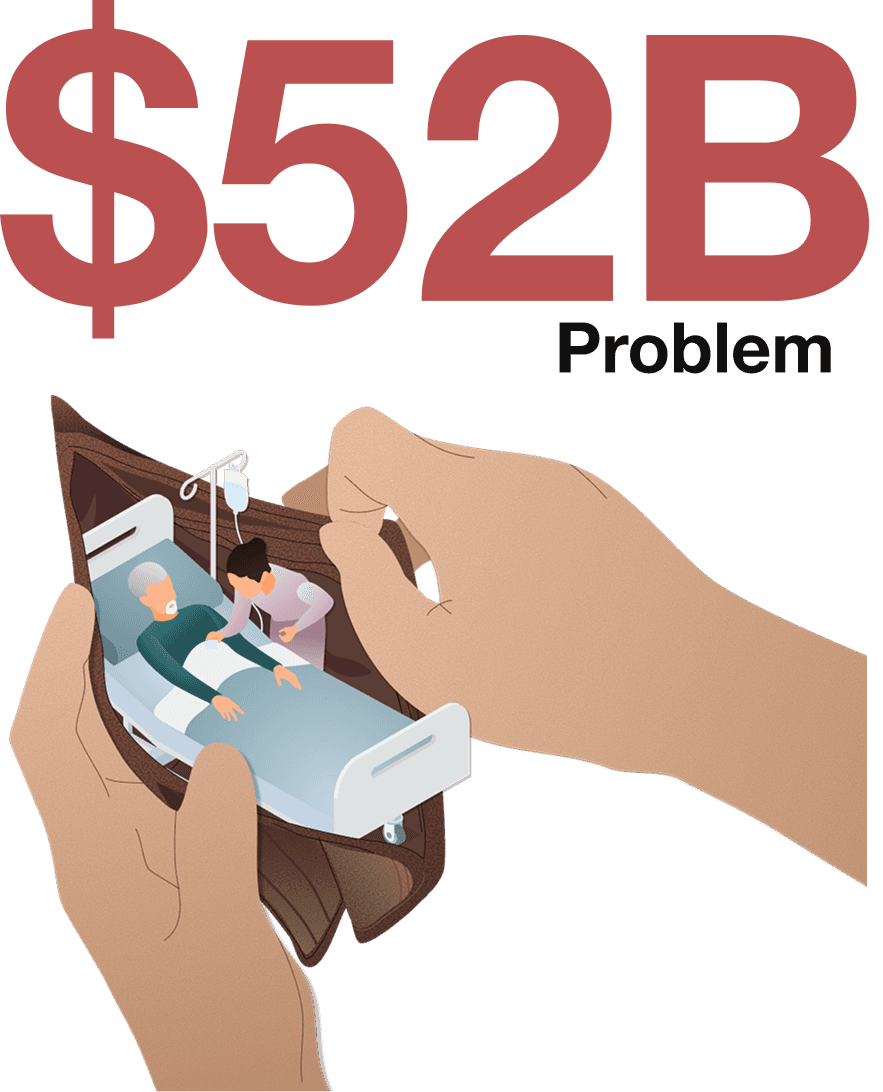
While 1% Doesn't sound much, as of September 2025 this is a

Document Clarity

AVS and prescriptions are hard to read/act on (small font, jargon, long lists).

Medication Management

Changed regimens, “what if I miss a dose?”, duplicate drugs, refills not lined up.

Safety Anxiety

Fear of collapsing with no one to notice; no daily “I’m okay” check.

Lack of Reassurance

No trusted, non-911 helpline for small worries that feel big at 2am.

Logistics

Rides to follow-ups, scale/BP/glucose supplies, weekend discharges with gaps.

Social Isolation

Alone without on-call reassurance, minor worries escalate into ED visits for safety and human contact.

Service Blueprint

Service Blueprint

The Problem Statement

The Problem Statement

In the U.S., adults over the age of 65 with a Heart condition and/or type 2 Diabetes who lack a regular in-home caregiver face a fragile first 30 days after hospital discharge:

they must secure meds, set up devices, spot warning signs, and make early follow-ups with fragmented support, which leads to confusion, missed care, and preventable ED returns.

In the U.S., adults over the age of 65 with a Heart condition and/or type 2 Diabetes who lack a regular in-home caregiver face a fragile first 30 days after hospital discharge:

they must secure meds, set up devices, spot warning signs, and make early follow-ups with fragmented support, which leads to confusion, missed care, and preventable ED returns.

The Challenge

Identifying the Problem

When older patients lack a support system at home, confusing discharge materials become a safety hazard. The inability to distinguish normal recovery symptoms from emergencies leads to missed doses and panic-driven ED visits. This failure in the continuity of care compromises patient quality of life and directly exposes health systems to HRRP readmission penalties.

Who & scope

Population

Adults 65+

Living Alone

Recently discharged with HF or T2D

Time window

First 30 days post-discharge (highest risk period)

Setting

Home

Community

Primary Care

Pharmacy

Data Flows via EHR

Research Approach

Methods

1:1 stakeholder interviews

Field Conversations

Policy/market Scan

Literature Review

Reddit ethnography (the GOLD mine)

Synthesis Tools

Service Blueprint

Ecosystem Map

Stakeholder map

Blue Ocean Strategy

ERRC

Flourishing Business Model Canvas

Journey & Emotional Arcs

2X2

Focus Cohort

Adults 65+

Recently Discharged

Heart Failure +/ Type 2 Diabetes

Living Alone

Research Synthesis

Research Outcome

Patient's Pain Points

In the hospital, patients have a safety net. While discharge planning starts early, the actual education often happens right as they’re leaving when they’re too exhausted or anxious to retain it. Once home, that confidence evaporates. They turn to their discharge packet for help, but find a wall of tiny text and confusing layouts. They can’t easily separate 'what to do today' from 'what to do this week,' replacing a sense of security with confusion exactly when self-care matters most.

Document Clarity

AVS and prescriptions are hard to read/act on (small font, jargon, long lists).

Lack of Reassurance

No trusted, non-911 helpline for small worries that feel big at 2am.

Medication Management

Changed regimens, “what if I miss a dose?”, duplicate drugs, refills not lined up.

Logistics

Rides to follow-ups, scale/BP/glucose supplies, weekend discharges with gaps.

Safety Anxiety

Fear of collapsing with no one to notice; no daily “I’m okay” check.

Social Isolation

Alone without on-call reassurance, minor worries escalate into ED visits for safety and human contact.

Document Clarity

AVS and prescriptions are hard to read/act on (small font, jargon, long lists).

Medication Management

Changed regimens, “what if I miss a dose?”, duplicate drugs, refills not lined up.

Safety Anxiety

Fear of collapsing with no one to notice; no daily “I’m okay” check.

Lack of Reassurance

No trusted, non-911 helpline for small worries that feel big at 2am.

Logistics

Rides to follow-ups, scale/BP/glucose supplies, weekend discharges with gaps.

Social Isolation

Alone without on-call reassurance, minor worries escalate into ED visits for safety and human contact.

Root Cause Analysis

Document Clarity

AVS and prescriptions are hard to read/act on (small font, jargon, long lists).

Medication Management

Changed regimens, “what if I miss a dose?”, duplicate drugs, refills not lined up.

Safety Anxiety

Fear of collapsing with no one to notice; no daily “I’m okay” check.

Lack of Reassurance

No trusted, non-911 helpline for small worries that feel big at 2am.

Logistics

Rides to follow-ups, scale/BP/glucose supplies, weekend discharges with gaps.

Social Isolation

Alone without on-call reassurance, minor worries escalate into ED visits for safety and human contact.

Consequences of this Readmission

Frequent 30-day returns hit hospitals on three fronts :

Loss of Life

Leads to 7 - 23% mortality rate depending upon the length of follow-up.

Loss of Reputation

Hospitals loose patient's trust and public ratings.

Penalties

~1% Deduction as penalty, reducing Medicare fee-for-service payments

While 1% Doesn't sound much, as of September 2025 this is a

Document Clarity

AVS and prescriptions are hard to read/act on (small font, jargon, long lists).

Medication Management

Changed regimens, “what if I miss a dose?”, duplicate drugs, refills not lined up.

Safety Anxiety

Fear of collapsing with no one to notice; no daily “I’m okay” check.

Lack of Reassurance

No trusted, non-911 helpline for small worries that feel big at 2am.

Logistics

Rides to follow-ups, scale/BP/glucose supplies, weekend discharges with gaps.

Social Isolation

Alone without on-call reassurance, minor worries escalate into ED visits for safety and human contact.

Service Blueprint

The Problem Statement

In the U.S., adults over the age of 65 with a Heart condition and/or type 2 Diabetes who lack a regular in-home caregiver face a fragile first 30 days after hospital discharge:

they must secure meds, set up devices, spot warning signs, and make early follow-ups with fragmented support, which leads to confusion, missed care, and preventable ED returns.

The Challenge

Identifying the Problem

When older patients lack a support system at home, confusing discharge materials become a safety hazard. The inability to distinguish normal recovery symptoms from emergencies leads to missed doses and panic-driven ED visits. This failure in the continuity of care compromises patient quality of life and directly exposes health systems to HRRP readmission penalties.

Who & scope

Population

Adults 65+

Living Alone

Recently discharged with HF or T2D

Time window

First 30 days post-discharge (highest risk period)

Setting

Home

Community

Primary Care

Pharmacy

Data Flows via EHR

Research Approach

Methods

1:1 stakeholder interviews

Field Conversations

Policy/market Scan

Literature Review

Reddit ethnography (the GOLD mine)

Synthesis Tools

Service Blueprint

Ecosystem Map

Stakeholder map

Blue Ocean Strategy

ERRC

Flourishing Business Model Canvas

Journey & Emotional Arcs

2X2

Focus Cohort

Adults 65+

Recently Discharged

Heart Failure +/ Type 2 Diabetes

Living Alone

Research Synthesis

Research Outcome

Patient's Pain Points

In the hospital, patients have a safety net. While discharge planning starts early, the actual education often happens right as they’re leaving when they’re too exhausted or anxious to retain it. Once home, that confidence evaporates. They turn to their discharge packet for help, but find a wall of tiny text and confusing layouts. They can’t easily separate 'what to do today' from 'what to do this week,' replacing a sense of security with confusion exactly when self-care matters most.

Document Clarity

AVS and prescriptions are hard to read/act on (small font, jargon, long lists).

Lack of Reassurance

No trusted, non-911 helpline for small worries that feel big at 2am.

Medication Management

Changed regimens, “what if I miss a dose?”, duplicate drugs, refills not lined up.

Logistics

Rides to follow-ups, scale/BP/glucose supplies, weekend discharges with gaps.

Safety Anxiety

Fear of collapsing with no one to notice; no daily “I’m okay” check.

Social Isolation

Alone without on-call reassurance, minor worries escalate into ED visits for safety and human contact.

Document Clarity

AVS and prescriptions are hard to read/act on (small font, jargon, long lists).

Medication Management

Changed regimens, “what if I miss a dose?”, duplicate drugs, refills not lined up.

Safety Anxiety

Fear of collapsing with no one to notice; no daily “I’m okay” check.

Lack of Reassurance

No trusted, non-911 helpline for small worries that feel big at 2am.

Logistics

Rides to follow-ups, scale/BP/glucose supplies, weekend discharges with gaps.

Social Isolation

Alone without on-call reassurance, minor worries escalate into ED visits for safety and human contact.

Root Cause Analysis

Document Clarity

AVS and prescriptions are hard to read/act on (small font, jargon, long lists).

Medication Management

Changed regimens, “what if I miss a dose?”, duplicate drugs, refills not lined up.

Safety Anxiety

Fear of collapsing with no one to notice; no daily “I’m okay” check.

Lack of Reassurance

No trusted, non-911 helpline for small worries that feel big at 2am.

Logistics

Rides to follow-ups, scale/BP/glucose supplies, weekend discharges with gaps.

Social Isolation

Alone without on-call reassurance, minor worries escalate into ED visits for safety and human contact.

Consequences of this Readmission

Frequent 30-day returns hit hospitals on three fronts :

Loss of Life

Leads to 7 - 23% mortality rate depending upon the length of follow-up.

Loss of Reputation

Hospitals loose patient's trust and public ratings.

Penalties

~1% Deduction as penalty, reducing Medicare fee-for-service payments

While 1% Doesn't sound much, as of September 2025 this is a

Document Clarity

AVS and prescriptions are hard to read/act on (small font, jargon, long lists).

Medication Management

Changed regimens, “what if I miss a dose?”, duplicate drugs, refills not lined up.

Safety Anxiety

Fear of collapsing with no one to notice; no daily “I’m okay” check.

Lack of Reassurance

No trusted, non-911 helpline for small worries that feel big at 2am.

Logistics

Rides to follow-ups, scale/BP/glucose supplies, weekend discharges with gaps.

Social Isolation

Alone without on-call reassurance, minor worries escalate into ED visits for safety and human contact.

Service Blueprint

The Problem Statement

In the U.S., adults over the age of 65 with a Heart condition and/or type 2 Diabetes who lack a regular in-home caregiver face a fragile first 30 days after hospital discharge:

they must secure meds, set up devices, spot warning signs, and make early follow-ups with fragmented support, which leads to confusion, missed care, and preventable ED returns.

The Challenge

Identifying the Problem

When older patients lack a support system at home, confusing discharge materials become a safety hazard. The inability to distinguish normal recovery symptoms from emergencies leads to missed doses and panic-driven ED visits. This failure in the continuity of care compromises patient quality of life and directly exposes health systems to HRRP readmission penalties.

Who & scope

Population

Adults 65+

Living Alone

Recently discharged with HF or T2D

Time window

First 30 days post-discharge (highest risk period)

Setting

Home

Community

Primary Care

Pharmacy

Data Flows via EHR

Research Approach

Methods

1:1 stakeholder interviews

Field Conversations

Policy/market Scan

Literature Review

Reddit ethnography (the GOLD mine)

Synthesis Tools

Service Blueprint

Ecosystem Map

Stakeholder map

Blue Ocean Strategy

ERRC

Flourishing Business Model Canvas

Journey & Emotional Arcs

2X2

Focus Cohort

Adults 65+

Recently Discharged

Heart Failure +/ Type 2 Diabetes

Living Alone

Research Synthesis

Research Outcome

Patient's Pain Points

In the hospital, patients have a safety net. While discharge planning starts early, the actual education often happens right as they’re leaving when they’re too exhausted or anxious to retain it. Once home, that confidence evaporates. They turn to their discharge packet for help, but find a wall of tiny text and confusing layouts. They can’t easily separate 'what to do today' from 'what to do this week,' replacing a sense of security with confusion exactly when self-care matters most.

Document Clarity

AVS and prescriptions are hard to read/act on (small font, jargon, long lists).

Lack of Reassurance

No trusted, non-911 helpline for small worries that feel big at 2am.

Medication Management

Changed regimens, “what if I miss a dose?”, duplicate drugs, refills not lined up.

Logistics

Rides to follow-ups, scale/BP/glucose supplies, weekend discharges with gaps.

Safety Anxiety

Fear of collapsing with no one to notice; no daily “I’m okay” check.

Social Isolation

Alone without on-call reassurance, minor worries escalate into ED visits for safety and human contact.

Document Clarity

AVS and prescriptions are hard to read/act on (small font, jargon, long lists).

Medication Management

Changed regimens, “what if I miss a dose?”, duplicate drugs, refills not lined up.

Safety Anxiety

Fear of collapsing with no one to notice; no daily “I’m okay” check.

Lack of Reassurance

No trusted, non-911 helpline for small worries that feel big at 2am.

Logistics

Rides to follow-ups, scale/BP/glucose supplies, weekend discharges with gaps.

Social Isolation

Alone without on-call reassurance, minor worries escalate into ED visits for safety and human contact.

Root Cause Analysis

Document Clarity

AVS and prescriptions are hard to read/act on (small font, jargon, long lists).

Medication Management

Changed regimens, “what if I miss a dose?”, duplicate drugs, refills not lined up.

Safety Anxiety

Fear of collapsing with no one to notice; no daily “I’m okay” check.

Lack of Reassurance

No trusted, non-911 helpline for small worries that feel big at 2am.

Logistics

Rides to follow-ups, scale/BP/glucose supplies, weekend discharges with gaps.

Social Isolation

Alone without on-call reassurance, minor worries escalate into ED visits for safety and human contact.

Consequences of this Readmission

Frequent 30-day returns hit hospitals on three fronts :

Loss of Life

Leads to 7 - 23% mortality rate depending upon the length of follow-up.

Loss of Reputation

Hospitals loose patient's trust and public ratings.

Penalties

~1% Deduction as penalty, reducing Medicare fee-for-service payments

While 1% Doesn't sound much, as of September 2025 this is a

Document Clarity

AVS and prescriptions are hard to read/act on (small font, jargon, long lists).

Medication Management

Changed regimens, “what if I miss a dose?”, duplicate drugs, refills not lined up.

Safety Anxiety

Fear of collapsing with no one to notice; no daily “I’m okay” check.

Lack of Reassurance

No trusted, non-911 helpline for small worries that feel big at 2am.

Logistics

Rides to follow-ups, scale/BP/glucose supplies, weekend discharges with gaps.

Social Isolation

Alone without on-call reassurance, minor worries escalate into ED visits for safety and human contact.

Service Blueprint

The Problem Statement

In the U.S., adults over the age of 65 with a Heart condition and/or type 2 Diabetes who lack a regular in-home caregiver face a fragile first 30 days after hospital discharge:

they must secure meds, set up devices, spot warning signs, and make early follow-ups with fragmented support, which leads to confusion, missed care, and preventable ED returns.

Opportunity Space

Opportunity Space

Blue Ocean Strategy

Blue Ocean Strategy

Blue Ocean Strategy

Emotional engagement (Tamagotchi-like feedback) + human reassurance + community action.

First-30-days focus, not generic aging tech.

Nonprofit ethos with measured clinical and social outcomes.

Emotional engagement (Tamagotchi-like feedback)

Emotional engagement (Tamagotchi-like feedback)

Human Reassurance

Human Reassurance

Community Action.

Community Action.

First-30-days focus, not generic aging tech.

First-30-days focus, not generic aging tech.

Nonprofit ethos

Nonprofit ethos

Measurable Clinical & Social Outcomes.

Measurable Clinical & Social Outcomes.

The Opportunity Strategy

The Opportunity Strategy

The Opportunity Strategy

The Opportunity Strategy

The Opportunity Strategy

The Untapped Opportunity

The Untapped Opportunity

Translate discharge into simple daily routines, add a human reassurance line for non-emergencies, and activate nearby helpers for meds/food/rides closing clarity, capability, reassurance, and connection gaps.

Translate discharge into simple daily routines, add a human reassurance line for non-emergencies, and activate nearby helpers for meds/food/rides closing clarity, capability, reassurance, and connection gaps.

The Untapped Opportunity

Translate discharge into simple daily routines, add a human reassurance line for non-emergencies, and activate nearby helpers for meds/food/rides closing clarity, capability, reassurance, and connection gaps.

The Untapped Opportunity

Translate discharge into simple daily routines, add a human reassurance line for non-emergencies, and activate nearby helpers for meds/food/rides closing clarity, capability, reassurance, and connection gaps.

The Untapped Opportunity

Translate discharge into simple daily routines, add a human reassurance line for non-emergencies, and activate nearby helpers for meds/food/rides closing clarity, capability, reassurance, and connection gaps.

The Solution

The Solution

The Solution

A three-part safety net Kiko, a Medi-mate hotline, and vetted neighbors guides solo seniors through the first 30 days after discharge.

A three-part safety net Kiko, a Medi-mate hotline, and vetted neighbors guides solo seniors through the first 30 days after discharge.

A three-part safety net Kiko, a Medi-mate hotline, and vetted neighbors guides solo seniors through the first 30 days after discharge.

Medi-Mate (Non-clinical Hotline)

Medi-Mate (Non-clinical Hotline)

Medi-Mate (Non-clinical Hotline)

One trusted number for “is this normal?” guidance; documents concerns; escalates to the right hospital contact when needed.


One trusted number for “is this normal?” guidance; documents concerns; escalates to the right hospital contact when needed.

One trusted number for “is this normal?” guidance; documents concerns; escalates to the right hospital contact when needed.

One trusted number for “is this normal?” guidance; documents concerns; escalates to the right hospital contact when needed.

One trusted number for “is this normal?” guidance; documents concerns; escalates to the right hospital contact when needed.


Kiko (robot companion):

Kiko (robot companion):

A mobile, expressive “pet” that follows you, mirrors adherence (happy/sad eyes), gives voice/large-text prompts, captures light context (weights/glucose via connected devices), and flags issues.

A mobile, expressive “pet” that follows you, mirrors adherence (happy/sad eyes), gives voice/large-text prompts, captures light context (weights/glucose via connected devices), and flags issues.

A mobile, expressive “pet” that follows you, mirrors adherence (happy/sad eyes), gives voice/large-text prompts, captures light context (weights/glucose via connected devices), and flags issues.

Volunteer Network (Community)

Volunteer Network (Community)

Volunteer Network (Community)

Verified helpers handle small tasks (first-fill, groceries, rides, check-ins) with consented, minimal data.


Verified helpers handle small tasks (first-fill, groceries, rides, check-ins) with consented, minimal data.

Verified helpers handle small tasks (first-fill, groceries, rides, check-ins) with consented, minimal data.

Verified helpers handle small tasks (first-fill, groceries, rides, check-ins) with consented, minimal data.

Verified helpers handle small tasks (first-fill, groceries, rides, check-ins) with consented, minimal data.

Service Architecture

Service Architecture

Service Architecture

Service Architecture

Service Architecture

Take care of yourself and Kiko stays happy, miss your medications or mess up your routine...he's going to sad

Take care of yourself and Kiko stays happy, miss your medications or mess up your routine...he's going to sad

Need a helping hand? The Volunteer Network is at your Service!

Need a helping hand? The Volunteer Network is at your Service!

Not sure if your symptoms need medical attention? No worries! The Medi-mate has it covered

Not sure if your symptoms need medical attention? No worries! The Medi-mate has it covered

A system to support, care and nourish

A system to support, care and nourish

Role Specifications

Role Specifications

Role Specifications

Role Specifications

Role Specifications

Value Proposition

Value Proposition

Value Proposition

For Patients

For Patients

For Patients

Clear plan, calm help, small wins daily → confidence over anxiety.

Clear plan, calm help, small wins daily → confidence over anxiety.

Clear plan, calm help, small wins daily → confidence over anxiety.

For Hospitals

For Hospitals

For Hospitals

For Hospitals

Fewer avoidable ED returns/readmissions; better experience.

Fewer avoidable ED returns/readmissions; better experience.

Fewer avoidable ED returns/readmissions; better experience.

For Volunteers

For Volunteers

For Volunteers

For Volunteers

Simple, safe tasks with recognition/credits; real impact.

Simple, safe tasks with recognition/credits; real impact.

Simple, safe tasks with recognition/credits; real impact.

Prototyping & Testing (Wizard-of-Oz)

Prototyping & Testing (Wizard-of-Oz)

Hypotheses

Hypotheses

  • Kiko’s personality fosters bond & adherence.

  • Medi-Mate reduces anxiety spikes and ED reassurance visits.

  • A “Today / This Week / Call-If” plan boosts comprehension and follow-through.

  • Kiko’s personality fosters bond & adherence.

  • Medi-Mate reduces anxiety spikes and ED reassurance visits.

  • A “Today / This Week / Call-If” plan boosts comprehension and follow-through.

Set-up

Set-up

Custom GPT simulated Kiko (pre-loaded with AVS, med lists, diet swaps); I role-played Medi-Mate via dedicated phone/email.

Custom GPT simulated Kiko (pre-loaded with AVS, med lists, diet swaps); I role-played Medi-Mate via dedicated phone/email.

Participants & Duration

Participants & Duration

6 Participants, 1 Week & 24x7 Access

6 Participants, 1 Week & 24x7 Access

What was Measured

What was Measured

Usefulness, Trust, Emotional Bond, Clarity, & kinds of requests raised

Usefulness, Trust, Emotional Bond, Clarity, & kinds of requests raised

Observed Signals

Observed Signals

Med clarification (5/6), symptom anxiety chats (3/6), loneliness/logistics (3/6), non-emergency help (4/6).

Med clarification (5/6), symptom anxiety chats (3/6), loneliness/logistics (3/6), non-emergency help (4/6).

Prototyping & Testing (Wizard-of-Oz)

Hypotheses

  • Kiko’s personality fosters bond & adherence.

  • Medi-Mate reduces anxiety spikes and ED reassurance visits.

  • A “Today / This Week / Call-If” plan boosts comprehension and follow-through.

Set-up

Custom GPT simulated Kiko (pre-loaded with AVS, med lists, diet swaps); I role-played Medi-Mate via dedicated phone/email.

Participants & Duration

6 Participants, 1 Week & 24x7 Access

What was Measured

Usefulness, Trust, Emotional Bond, Clarity, & kinds of requests raised

Observed Signals

Med clarification (5/6), symptom anxiety chats (3/6), loneliness/logistics (3/6), non-emergency help (4/6).

Prototyping & Testing (Wizard-of-Oz)

Hypotheses

  • Kiko’s personality fosters bond & adherence.

  • Medi-Mate reduces anxiety spikes and ED reassurance visits.

  • A “Today / This Week / Call-If” plan boosts comprehension and follow-through.

Set-up

Custom GPT simulated Kiko (pre-loaded with AVS, med lists, diet swaps); I role-played Medi-Mate via dedicated phone/email.

Participants & Duration

6 Participants, 1 Week & 24x7 Access

What was Measured

Usefulness, Trust, Emotional Bond, Clarity, & kinds of requests raised

Observed Signals

Med clarification (5/6), symptom anxiety chats (3/6), loneliness/logistics (3/6), non-emergency help (4/6).

Prototyping & Testing (Wizard-of-Oz)

Hypotheses

  • Kiko’s personality fosters bond & adherence.

  • Medi-Mate reduces anxiety spikes and ED reassurance visits.

  • A “Today / This Week / Call-If” plan boosts comprehension and follow-through.

Set-up

Custom GPT simulated Kiko (pre-loaded with AVS, med lists, diet swaps); I role-played Medi-Mate via dedicated phone/email.

Participants & Duration

6 Participants, 1 Week & 24x7 Access

What was Measured

Usefulness, Trust, Emotional Bond, Clarity, & kinds of requests raised

Observed Signals

Med clarification (5/6), symptom anxiety chats (3/6), loneliness/logistics (3/6), non-emergency help (4/6).

Projected Impact & KPIs 

Projected Impact & KPIs 

0%

0%

Drop in 30-day readmissions

0%

0%

Drop in 30-day readmissions

0%

0%

Drop in 30-day readmissions

0%

0%

Reduced Unplanned ED Visits

0%

0%

Reduced Unplanned ED Visits

0%

0%

Reduced Unplanned ED Visits

0%

0%

Follow-up kept (7–14d)

0%

0%

Follow-up kept (7–14d)

0%

0%

Follow-up kept (7–14d)

0

0

Points Reduced on 10-pt Anxiety scale

0

0

Points Reduced on 10-pt Anxiety scale

0

0

Points Reduced on 10-pt Anxiety scale

Projected Impact & KPIs 

0%

0%

Drop in 30-day readmissions

0%

0%

Reduced Unplanned ED Visits

0%

0%

Follow-up kept (7–14d)

0

0

Points Reduced on 10-pt Anxiety scale

Projected Impact & KPIs 

0%

0%

Drop in 30-day readmissions

0%

0%

Reduced Unplanned ED Visits

0%

0%

Follow-up kept (7–14d)

0

0

Points Reduced on 10-pt Anxiety scale

Projected Impact & KPIs 

0%

0%

Drop in 30-day readmissions

0%

0%

Reduced Unplanned ED Visits

0%

0%

Follow-up kept (7–14d)

0

0

Points Reduced on 10-pt Anxiety scale

Learnings & Reflection

Learnings & Reflection

Learnings & Reflection

True insight requires going beyond interviews to physically inhabit the user's constraints.

Being "alone" is a structural gap in our care models, not just a physical state.

Our goal as designers is to listen so deeply that we turn current struggles into past relics.

Success depends on translating design vision into the specific languages of clinical and financial stakeholders.

Success depends on translating design vision into the specific languages of clinical and financial stakeholders.

Managing complex ecosystems requires the ability to align diverse organizations toward a single, human-centered goal.

Great one on one Mentorship

Great one on one Mentorship

Great one on one Mentorship

Great one on one Mentorship

In-depth Prototyping

In-depth Prototyping

In-depth Prototyping

In-depth Prototyping

Battle Ground of FigJam

Battle Ground of FigJam

Battle Ground of FigJam

Battle Ground of FigJam

Opportunity Space

Blue Ocean Strategy

Emotional engagement (Tamagotchi-like feedback) + human reassurance + community action.

First-30-days focus, not generic aging tech.

Nonprofit ethos with measured clinical and social outcomes.

Explore More Projects

Explore More Projects

PLVIxDesign

PLVIxDesign